STOP SNORING with SNORE GUARD
100% GUARANTEED
BOOK YOUR FREE CONSULTATION
Snoreguard New Zealand
Custom-Made Anti-Snoring Devices — Trusted for Over 30 Years
Snoreguard provides individually fitted oral devices that stop snoring at its source. No surgery. No masks. No machines. Just quiet, restful sleep for you and your partner.
────────────────────────────────────────────────────────
Stop Snoring Effectively with Snoreguard
If snoring has become a problem in your life, you already know how frustrating it can be. The interrupted sleep. The exhaustion that follows you through the day. The strain it puts on your relationship when your partner retreats to another room just to get some rest. Perhaps you’ve tried various remedies—nasal strips, throat sprays, special pillows—only to find that nothing seems to work.
If you want to understand the root causes first, read our Snoring Overview
You’re not alone, and you’re not without options.
Snoreguard provides custom-made anti-snoring devices designed to fit comfortably around your teeth and gums. Unlike generic products that promise results but rarely deliver, each Snoreguard is individually crafted to suit your unique mouth. The device works by gently repositioning your jaw during sleep, keeping your airway open and stopping snoring at its source.
There’s no surgery involved. No masks to wear. No machines humming beside your bed. Just a comfortable, custom-fitted device that you wear while you sleep—and wake up feeling refreshed, knowing that both you and your partner finally got the quiet night’s rest you deserve.
We’ve been helping New Zealanders sleep better for over three decades. In that time, we’ve seen the difference that effective treatment makes—not just to sleep quality, but to energy levels, relationships, and overall quality of life. Snoring doesn’t have to be something you simply live with. It can be solved.
────────────────────────────────────────────────────────
Why Snoring Should Not Be Ignored
It’s easy to dismiss snoring as a minor inconvenience—something that affects your partner more than it affects you. But this is a mistake. Snoring is your body’s way of signalling that something isn’t quite right with your breathing during sleep, and the consequences extend far beyond the noise itself.
When you snore, your airway is partially obstructed. Air passing through this narrowed space causes the soft tissues in your throat to vibrate, producing that familiar rumbling sound. But while the sound travels outward, the real impact is happening inside your body.
With each partially blocked breath, your body works harder to get the oxygen it needs. This extra effort, repeated hundreds of times throughout the night, disrupts the natural rhythm of your sleep. Even if you don’t fully wake up, your brain is constantly being pulled out of the deeper, restorative stages of sleep to deal with the breathing difficulty.
The result is a collection of symptoms that many snorers know all too well. You wake up feeling tired despite spending enough hours in bed. Your head aches in the morning. You struggle to concentrate at work and find yourself irritable over small things. You feel the pull of sleep during the day—in meetings, while driving, in quiet moments when you should be alert.
Common Effects of Snoring
People who snore frequently may experience persistent tiredness that doesn’t improve with more time in bed. Morning headaches are common, caused by the fluctuating oxygen levels during the night. Concentration suffers as the brain struggles to function on fragmented sleep. Irritability increases as patience wears thin. Daytime sleepiness becomes a constant companion, making it harder to stay alert and engaged.
More concerning are the longer-term health implications. Research has linked chronic snoring to elevated blood pressure, as the cardiovascular system works harder to compensate for reduced oxygen intake. This increased strain is associated with a higher risk of heart disease and stroke over time. The body simply isn’t designed to struggle for air night after night without consequence.
There’s also the safety dimension. Daytime sleepiness increases the risk of accidents—whether you’re driving, operating machinery, or simply navigating your daily responsibilities. When you’re running on fragmented sleep, your reaction times slow and your judgment falters.
And then there’s the impact on relationships. Sleeping apart becomes the norm for many couples dealing with snoring. What should be a shared, intimate space becomes a source of tension and resentment. Partners lose sleep themselves, lying awake frustrated or retreating to the spare room. Over time, this physical separation can create emotional distance as well.
None of this is inevitable. Snoring can be treated, and when it is, the benefits extend to every area of life affected by poor sleep.
────────────────────────────────────────────────────────
The Real Cost to Your Health
The health consequences of chronic snoring are not just theoretical — they’re backed by research and clinical evidence. Studies show that people with untreated snoring and sleep apnoea face significantly higher risks across multiple areas of health.
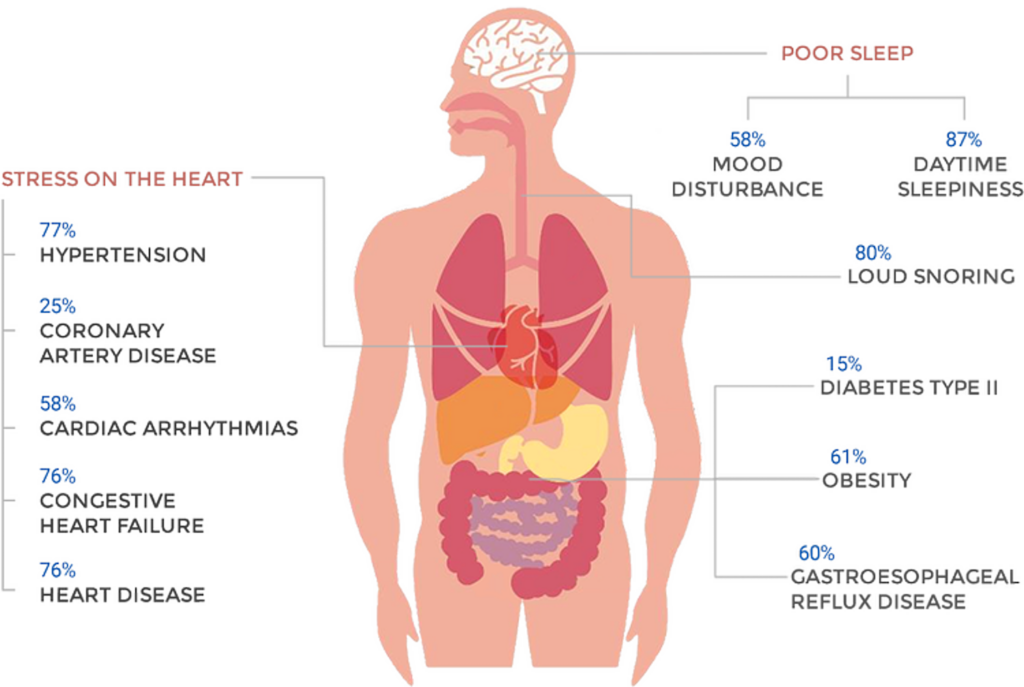
Cardiovascular strain is one of the most serious concerns. Research indicates that 77% of people with obstructive sleep apnoea have hypertension, and the risk of heart disease, cardiac arrhythmias, and congestive heart failure is dramatically elevated. When your body struggles to breathe night after night, your heart pays the price.
Daytime functioning suffers dramatically. Up to 87% of people with sleep-disordered breathing experience excessive daytime sleepiness, and 58% report mood disturbances including irritability, anxiety, and depression. This isn’t just feeling tired — it affects your work, your relationships, and your safety behind the wheel.
Metabolic health is also affected. Sleep apnoea is linked to increased rates of type 2 diabetes and obesity, creating a cycle that can be difficult to break. Poor sleep disrupts the hormones that regulate appetite and metabolism, making weight management harder.
The impact extends throughout the body — from gastroesophageal reflux to cognitive decline. Every system suffers when sleep is compromised.
The good news? Treating snoring effectively can help reduce these risks and restore your body to healthier function.
Find answers to common questions in our FAQ
────────────────────────────────────────────────────────
Snoring and Sleep Apnoea
When Snoring Signals a More Serious Condition
While snoring itself is worth addressing, it can also be a symptom of a more serious condition called Obstructive Sleep Apnoea (OSA). In sleep apnoea, the airway doesn’t just narrow—it completely closes during sleep, causing breathing to stop temporarily.
These breathing pauses, called apnoeas, can last from a few seconds to over a minute. When they occur, oxygen levels in the blood drop, and the brain briefly rouses the sleeper to restore normal breathing. This cycle can repeat dozens or even hundreds of times per night, severely fragmenting sleep without the person being aware of it.
Not everyone who snores has sleep apnoea, but the two conditions are closely related. Heavy, chronic snoring—especially when accompanied by other symptoms—warrants attention.
Signs That May Indicate Sleep Apnoea
If your snoring is loud and persistent, occurring most nights rather than occasionally, it may be worth investigating further. Witnessed pauses in breathing during sleep—often noticed by a partner who sees you stop breathing and then gasp or choke—are a significant warning sign.
Other indicators include waking with a dry mouth or sore throat, feeling unrefreshed despite adequate time in bed, experiencing morning grogginess or headaches, and suffering from night sweats. Poor memory and difficulty concentrating can result from the repeated sleep disruption. Some people notice they need to urinate more frequently during the night. Elevated blood pressure that’s difficult to control with medication can also be connected to undiagnosed sleep apnoea.
If these symptoms sound familiar, we strongly encourage you to seek professional assessment. Sleep apnoea is a recognised medical condition with effective treatments available. Snoreguard can help with snoring and mild to moderate sleep apnoea, but proper diagnosis ensures you receive the most appropriate care for your situation.
The good news is that whether you’re dealing with simple snoring or something more complex, solutions exist. You don’t have to continue suffering night after night.
If you have been diagnosed with obstructive sleep apnoea, visit our Sleep Apnea page to understand how Snoreguard may help.
────────────────────────────────────────────────────────
About Snoreguard
A Proven, Personalised Solution
Snoreguard has been helping New Zealanders overcome snoring for more than thirty years. In that time, we’ve learned that there’s no single solution that works for everyone. People snore for different reasons, and effective treatment needs to address those individual differences.
That’s why we’ve developed four specifically targeted device designs, each tailored to address different causes and patterns of snoring. During your consultation, we assess your particular situation—the anatomy of your mouth and throat, the nature of your snoring, any related symptoms—and recommend the device most likely to work for you.
Every Snoreguard is custom-made. We take precise impressions of your teeth and gums, then craft a device that fits your mouth exactly. This isn’t a generic, one-size-fits-all product pulled from a shelf. It’s a personalised solution created specifically for you.
The custom fit matters enormously, both for effectiveness and comfort. A device that doesn’t fit properly won’t position your jaw correctly, reducing its ability to keep your airway open. And a device that’s uncomfortable simply won’t get used—it will end up in a drawer, and you’ll be back to snoring.
Designed for Comfort and Long-Term Use
We understand that wearing anything in your mouth while you sleep takes some adjustment. That’s why comfort is central to our design philosophy. A custom-fitted device that sits naturally against your teeth and gums is far more likely to become part of your nightly routine than something that feels awkward or causes discomfort.
Most people adapt to wearing their Snoreguard within a few days. After that initial period, many report that they barely notice it’s there. Unlike a CPAP mask, there’s nothing covering your face, no straps around your head, no machine noise to disturb you or your partner. You can speak, drink water, and move naturally during the night.
Snoreguard devices are also built to last. With proper care, a well-maintained device typically serves for many years. We have clients whose devices have lasted seven years or more before needing replacement. When you consider the cost spread over that period—and compare it to the ongoing expense of other solutions or the significant investment of surgical procedures—Snoreguard represents excellent value.
Perhaps most importantly, Snoreguard requires no surgery and is completely non-invasive. There’s no recovery time, no risk of complications, no permanent changes to your body. If your circumstances change or you decide to explore other options in the future, you’re free to do so.
────────────────────────────────────────────────────────
Our 100% Snoring-Stop Guarantee
We stand behind our solution with complete confidence. Snoreguard comes with a full money-back guarantee—because we believe that if a product genuinely works, the provider should be willing to stand behind it.
Here’s our promise: if Snoreguard doesn’t stop your snoring, you get your money back.
In the unlikely event that your device doesn’t work as expected, we ask that you contact us first. Sometimes a small adjustment is all that’s needed. We’ll work with you to understand what’s happening and make modifications where possible. Our goal is your success, and we’re committed to doing what it takes to achieve it.
If, after working through the issues together, we determine that Snoreguard isn’t suitable for your particular situation, we’ll refund your purchase price. We’ll also take the time to discuss your situation and help guide you toward alternative options that might work better for you.
This guarantee isn’t just a marketing claim—it’s a reflection of three decades of experience and thousands of satisfied clients. When your product genuinely works, you can afford to stand behind it.
A word of caution: if you’re considering any anti-snoring product or procedure that doesn’t come with a guarantee, think carefully. The absence of a guarantee often means the provider isn’t confident in their own results. You deserve better than that.
We stand behind our work with a 100% satisfaction promise — read our full Guarantee here.
────────────────────────────────────────────────────────
Real People, Real Results
Over three decades, we’ve helped thousands of New Zealanders reclaim their sleep. The stories we hear are remarkably consistent: years of struggling with snoring, trying product after product without success, and then finding genuine relief with Snoreguard.
One client came to us after spending ten years trying everything—nasal sprays, plastic devices, special pillows, even contemplating surgery. He approached Snoreguard with understandable scepticism. Within five days of adjustment, he stopped snoring completely. That was nearly thirty years ago, and he’s been a loyal client ever since, replacing his device when needed and enjoying quiet sleep every night.
Another couple had been sleeping apart for over six years because of the husband’s severe snoring. He’d undergone three throat operations over four years, tried CPAP therapy without success, and was told that jaw surgery might be the only remaining option. Snoreguard worked when everything else had failed. For the first time in years, they were able to share a bedroom again.
A frequent business traveller found that while CPAP was effective, it was impractical for his lifestyle—too noisy, too cumbersome, too difficult to explain in crew rest facilities on aircraft. Snoreguard gave him the freedom to travel without the burden of a machine, and he describes it as one of his most treasured possessions.
These aren’t exceptional cases. They’re representative of the results we see regularly. Individual experiences vary, but the majority of people who use Snoreguard correctly experience significant improvement in their snoring and sleep quality.
See real Snoreguard customer testimonials and long-term experiences.
────────────────────────────────────────────────────────
Book Your Free Consultation
Take the First Step Toward Better Sleep
A quiet night’s sleep can transform your life. Better rest means more energy, sharper thinking, improved mood, and stronger relationships. It means waking up feeling genuinely refreshed rather than dragging yourself through another exhausted day.
If snoring is affecting your life, your health, or your relationships, we encourage you to take the first step. Book a free consultation with Snoreguard. There’s no obligation, no pressure, no commitment required.
During your consultation, we’ll discuss your snoring history, any treatments you’ve tried, and your current symptoms. We’ll examine your mouth and throat to understand your particular anatomy. Based on this assessment, we’ll give you our honest opinion about whether Snoreguard can help and which approach is likely to work best for your situation.
If you decide to proceed, we’ll take impressions of your teeth and create your custom device. The process is straightforward and non-invasive. Most people are sleeping better within a few weeks of their first visit.
You’ve lived with snoring long enough. Help is available, and it starts with a simple conversation.
────────────────────────────────────────────────────────
Contact Snoreguard
Free consultations are available by phone or through online booking. We’re happy to answer your questions and help you understand your options.
Mobile: 027 523 2134
Email: snoreguard.nz@gmail.com
Location: Snoreguard New Zealand, 178a Waimumu Road, Massey, Auckland 0614
If you’re ready to talk, contact Snoreguard New Zealand for a free consultation